Disability Equality Training DET Courses
Disability Equality Training (DET) helps organisations develop a better understanding of disability, equality and inclusion. Our training equips employees with the knowledge and practical skills to recognise barriers, challenge misconceptions and improve the way they communicate with and support disabled people.
ESL Services provides professional Disability Equality Training courses for businesses, public sector organisations, charities and other workplaces. Based in Livingston, West Lothian, we deliver tailored training in Central Scotland and across the UK.
Our courses explore the social model of disability, the Equality Act 2010, disability discrimination, accessibility and inclusive customer service. Participants develop a greater understanding of the challenges faced by disabled people and how they can contribute to creating more accessible and inclusive environments.

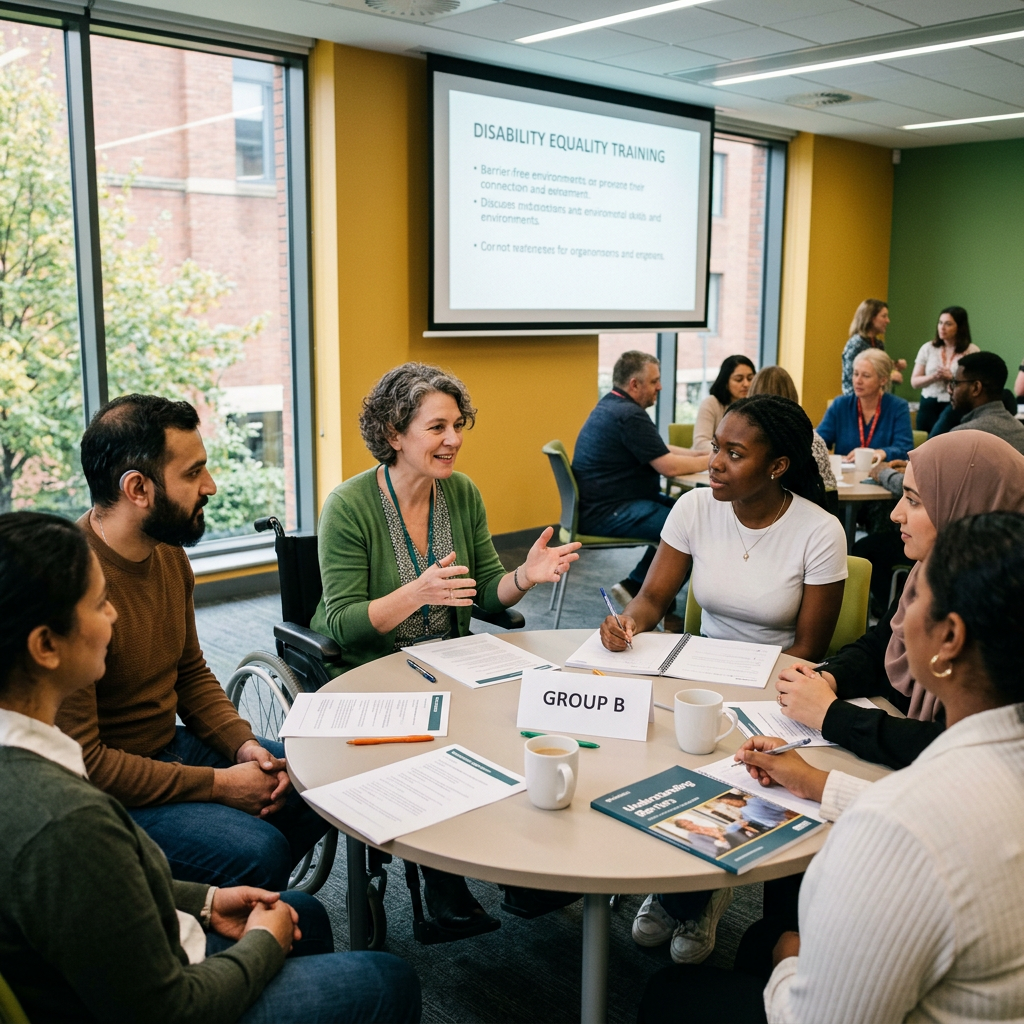
What is Disability Equality Training?
Disability Equality Training (DET) helps individuals and organisations understand disability, equality and inclusion, developing greater awareness of the barriers disabled people can face in everyday life.
It explores the social model of disability, challenges common misconceptions and promotes positive attitudes towards disability. Through practical learning and discussion, participants gain the knowledge and confidence to communicate effectively, recognise discrimination and understand how to make reasonable adjustments.
The training also helps organisations improve accessibility, deliver inclusive services and create a more welcoming environment for disabled employees, customers and visitors.
What Does Disability Equality Training Cover?
Our Disability Equality Training courses explore the different barriers disabled people can experience and how organisations can improve accessibility, equality and inclusion.
Training can cover a range of important subjects, including:
The Social Model of Disability: Understanding how physical, communication and attitudinal barriers can disable people.
Physical Disabilities: Understanding different mobility impairments and the barriers people may encounter.
Sensory Disabilities: Exploring visual and hearing impairments and effective communication.
Learning Disabilities and Difficulties: Understanding different needs and providing appropriate support.
Assistance Dogs: Understanding the role of assistance dogs and access rights.
Disability Discrimination: Recognising discrimination and understanding responsibilities under the Equality Act 2010.
Communication and Customer Service: Developing confidence when communicating with and supporting disabled customers, colleagues and visitors.
Accessibility and Inclusion: Identifying barriers and considering practical ways to create more accessible environments.
Training content can be tailored to the organisation, its employees and the services it provides.
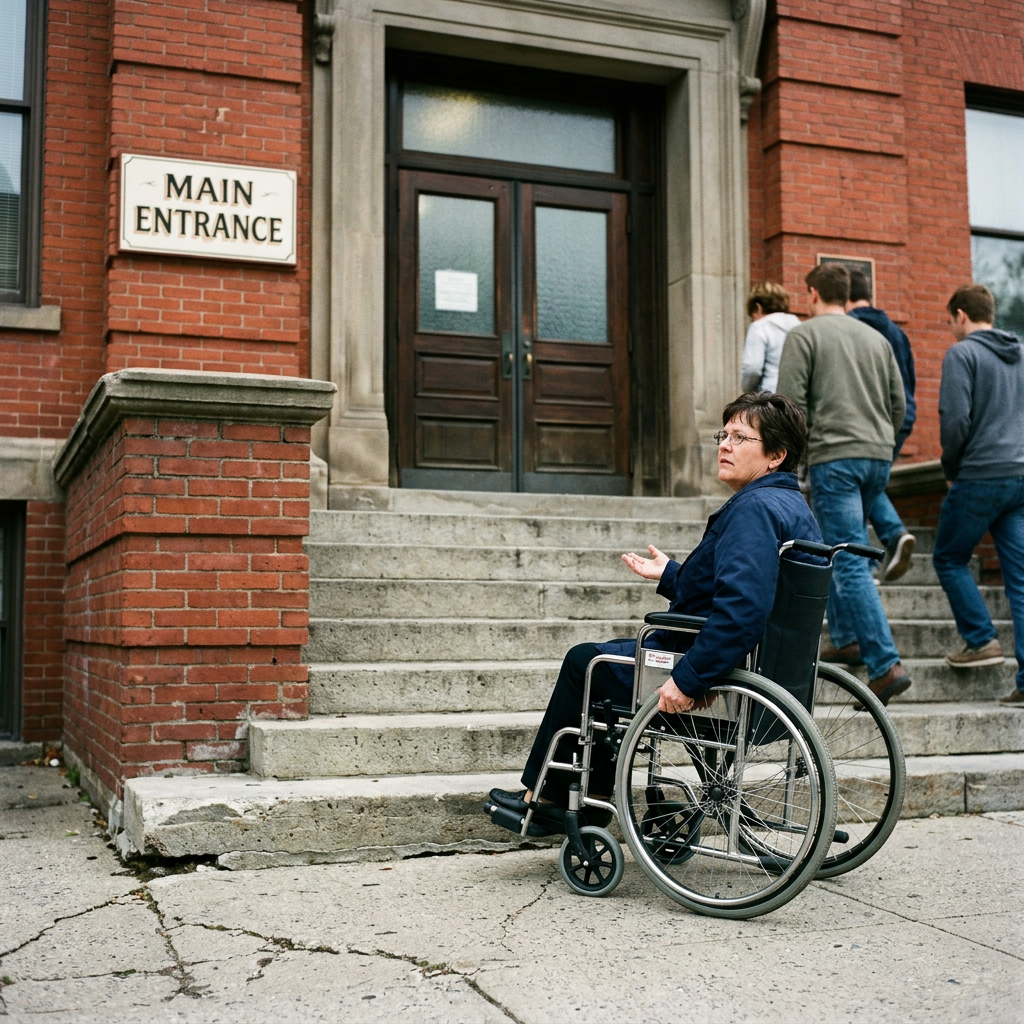
Disability Equality Training is not just about compliance—it’s about driving meaningful change
ESL Services
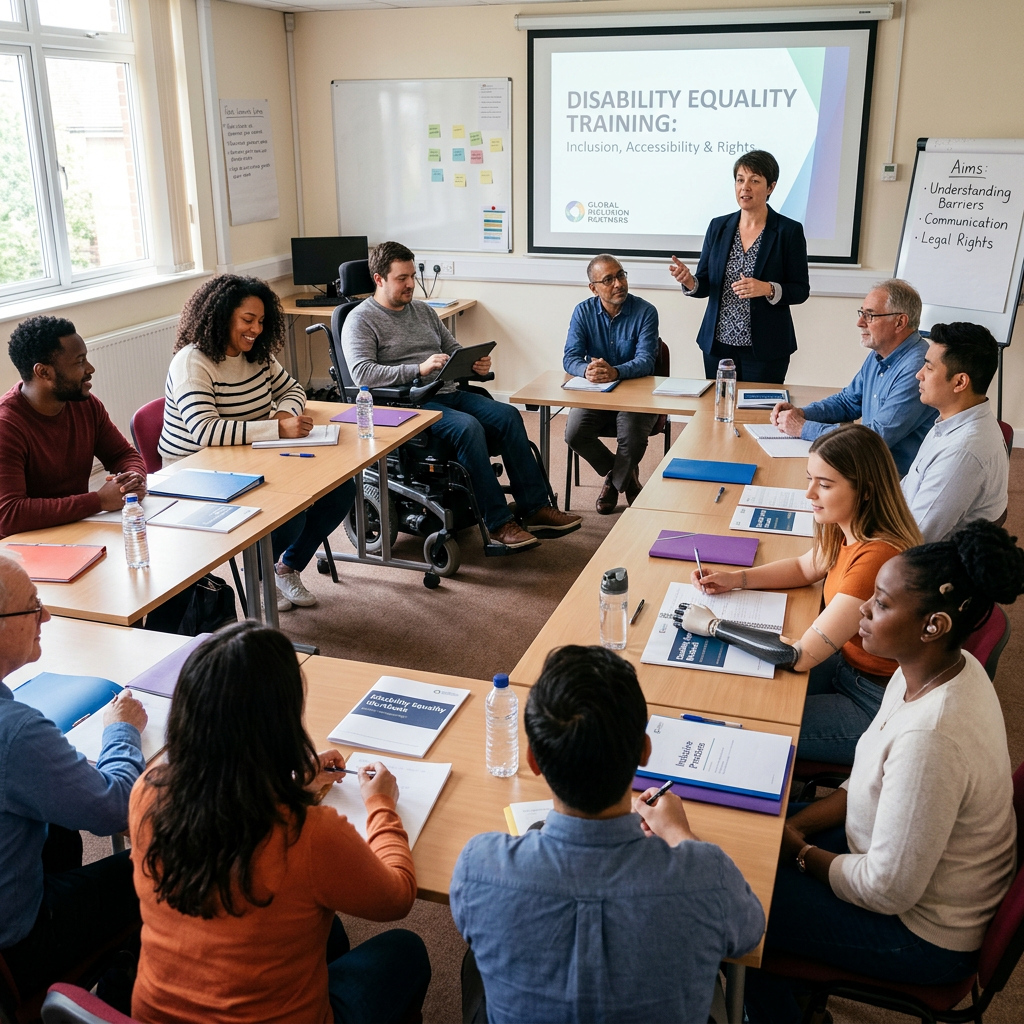
Who Should Attend?
Disability Equality Training is suitable for employees, managers and organisations looking to improve their understanding of disability, equality and inclusion. It is particularly beneficial for people whose roles involve interacting with disabled colleagues, customers, visitors or members of the public.
Our training courses are suitable for a wide range of organisations and workplaces, including:
Businesses and Employers: Helping employees develop inclusive workplace practices and better understand the needs of disabled colleagues and customers.
Public Sector Organisations: Supporting staff who provide public services and interact with people with different access requirements.
Customer-Facing Employees: Developing confidence when communicating with and assisting disabled customers and visitors.
Managers and Supervisors: Improving understanding of disability equality, workplace inclusion and reasonable adjustments.
Charities and Community Organisations: Helping staff and volunteers provide more accessible and inclusive services.
Education and Leisure Facilities: Supporting employees who work with disabled students, visitors, participants and members of the public.
Disability Equality Training can benefit employees at all levels, regardless of their previous experience or knowledge of disability. Course content can be tailored to reflect the organisation’s activities, staff responsibilities and training requirements.
What Does Disability Equality Training Cover?
ESL Services’ Disability Equality Training courses explore a range of subjects designed to improve understanding of disability, equality and inclusion. Participants learn about the barriers disabled people can experience and how attitudes, environments, communication and working practices can affect accessibility.
Our training covers important areas of disability equality, including:
The Social Model of Disability
Understanding the social model of disability and how physical, organisational and attitudinal barriers can prevent disabled people from participating fully in everyday activities.
Understanding Different Disabilities
Exploring different types of disability, including physical, sensory and learning disabilities, and recognising that individual experiences, needs and access requirements vary.
Physical Disabilities
Understanding mobility impairments and the barriers disabled people may encounter when accessing buildings, facilities, services and workplaces.
Visual and Hearing Impairments
Developing an understanding of visual and hearing impairments, including communication considerations and ways to make information and services more accessible.
Learning Disabilities
Understanding learning disabilities and the importance of clear communication, appropriate support and inclusive approaches.
Disability Discrimination and the Equality Act 2010
Exploring disability discrimination, equality and the legal responsibilities organisations have under the Equality Act 2010, including the duty to make reasonable adjustments.
Inclusive Communication and Customer Service
Developing confidence when communicating with disabled people, understanding appropriate assistance and providing respectful, inclusive customer service.
Assistance Dogs
Understanding the role of assistance dogs and the importance of allowing disabled people to access services and facilities with their assistance dogs.
Training content can be adapted to reflect the organisation’s activities, employees’ responsibilities and the needs of the people they serve.

Benefits of Disability Equality Training
Disability Equality Training helps organisations develop a more inclusive approach to supporting disabled people. By improving employees’ understanding of disability, equality and accessibility, training can help reduce barriers, improve communication and encourage more positive attitudes towards disability.
The benefits of Disability Equality Training include:
Improved Understanding of Disability
Develop a better understanding of different disabilities, the challenges disabled people may experience and the barriers that can affect their everyday lives.
More Inclusive Communication
Help employees communicate confidently and appropriately with disabled colleagues, customers and visitors, taking individual communication needs into consideration.
Recognising and Removing Barriers
Improve awareness of physical, communication and attitudinal barriers that can prevent disabled people from accessing buildings, facilities, services and workplaces.
Greater Awareness of Equality and Responsibilities
Help employees understand disability discrimination, the Equality Act 2010 and the importance of reasonable adjustments in the workplace and when providing services.
Improved Customer Service
Equip customer-facing employees with the knowledge and confidence to provide respectful, accessible and inclusive services to disabled customers and visitors.
Creating an Inclusive Workplace
Encourage positive attitudes, challenge misconceptions and support a workplace culture where disabled employees feel respected, included and supported.
Building Confidence and Positive Attitudes
Give employees greater confidence when interacting with disabled people, understanding different access requirements and providing appropriate assistance.


Disability Equality Training and the Equality Act 2010
The Equality Act 2010 provides legal protection against disability discrimination and places responsibilities on organisations to make reasonable adjustments for disabled people.
Employers, businesses and organisations providing goods, facilities and services need to understand how their practices, policies and working environments may affect disabled people.
Disability Equality Training helps employees develop a better understanding of these responsibilities and how they relate to their everyday roles. It explores important aspects of disability equality, including:
Disability Discrimination: Understanding how disabled people may experience direct and indirect discrimination, harassment and unfavourable treatment.
Reasonable Adjustments: Understanding why reasonable adjustments are important and how they can help remove disadvantages experienced by disabled people.
Inclusive Workplace Practices: Recognising barriers that may affect disabled employees and supporting equality in the workplace.
Accessible Goods and Services: Understanding the importance of providing services that disabled customers and visitors can access and use.
Equality and Inclusion: Developing positive attitudes towards disability and promoting fair treatment and equal opportunities.
By improving disability understanding and awareness of the Equality Act 2010, Disability Equality Training helps employees recognise potential barriers, consider appropriate adjustments and contribute to more inclusive workplaces and services.
ESL Services provides tailored Disability Equality Training to help organisations develop the knowledge and confidence to support disabled employees, customers and visitors.
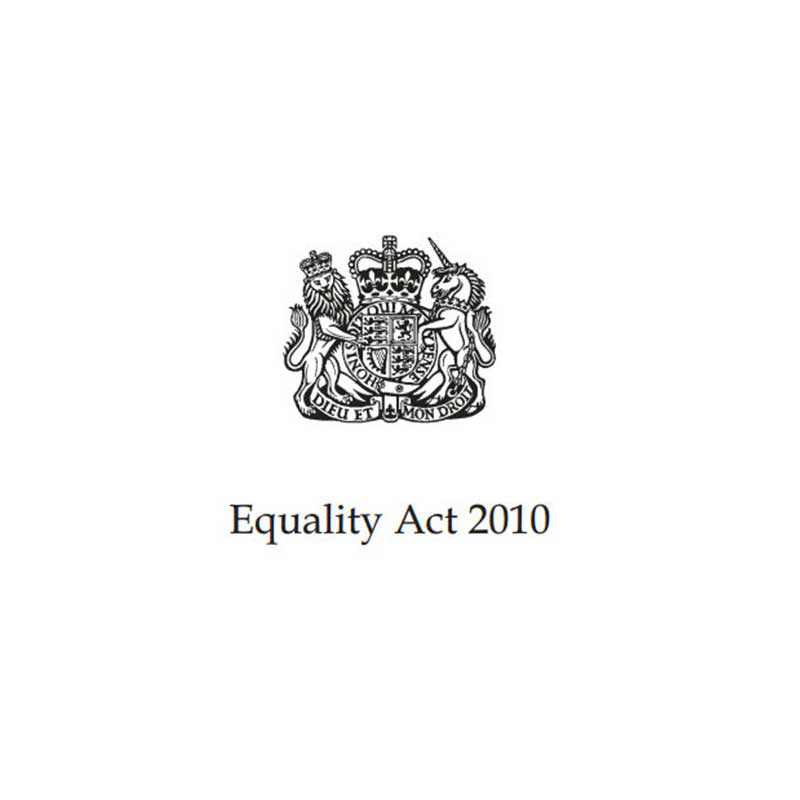
Disability Equality Training – Course Delivery and Assessment
ESL Services delivers practical Disability Equality Training designed to help employees develop a better understanding of disability, equality and inclusion.
Training is delivered on-site at your organisation and combines trainer-led instruction, discussion and practical learning activities. Course content can be adapted to suit your organisation, the roles of your employees and the services you provide.
Course Information
Duration: Approximately 4 hours.
Delivery: Face-to-face, on-site training.
Group Size: Maximum of 16 participants.
Minimum Age: 16 years.
Assessment: Practical assessment and evaluation of learning.
Certification: ESL Services certificate, subject to successful completion of the course requirements.
The training provides participants with an opportunity to develop their understanding of disability equality and consider how they can apply what they have learned in their everyday working roles.
Location: In-house Training, On-site Training
Cost: Contact us for prices
Frequently Asked Questions
What is Disability Equality Training (DET)?
Disability Equality Training is designed to improve understanding of disability, equality and inclusion. It helps participants recognise barriers faced by disabled people, challenge misconceptions and develop practical ways to improve accessibility and communication.
Why is Disability Equality Training important for employees?
Disability Equality Training helps employees understand the experiences of disabled people and develop the knowledge and confidence to communicate effectively, challenge discrimination and provide more inclusive services.
Who needs Disability Equality Training?
Disability Equality Training is beneficial for employees, managers, HR professionals, customer-facing staff, educators and public service workers. It is particularly useful for organisations that interact with disabled customers, colleagues and visitors.
How long does a Disability Equality Training course take?
ESL Services offers Disability Equality Training courses lasting approximately four hours, depending on the training package and the organisation’s requirements.
Can Disability Equality Training be delivered at our workplace?
Yes. ESL Services provides on-site and in-house Disability Equality Training, with course content tailored to the organisation’s requirements.
Does Disability Equality Training cover the Equality Act 2010?
Yes. Training can explore disability discrimination, reasonable adjustments and the responsibilities organisations have under the Equality Act 2010.
Where does ESL Services provide Disability Equality Training?
ESL Services is based in Livingston, West Lothian, providing Disability Equality Training across Central Scotland and throughout the UK.
Book Your Disability Equality Training Course
Looking to improve disability understanding, equality and inclusion within your organisation?
ESL Services provides tailored Disability Equality Training for businesses, public sector organisations, charities and other workplaces.
Contact us to discuss your training requirements, course content and pricing.
Call 01506 412791 or email sales@esl-services.co.uk to arrange your training.