Disability Access Audits - DDA - Equality Act
Professional Disability Accessibility Audits to Improve Inclusion and Access
At ESL Services, we provide professional Disability Access Audits, also known as DDA Audits, Equality Act Audits, or Disability Accessibility Audits, helping organisations identify and remove barriers that may prevent disabled people from accessing buildings, facilities, and services.
A Disability Access Audit can be required across a wide range of buildings, facilities and services, each presenting different accessibility considerations. With over 20 years of experience in disability access and accessibility, we work with businesses, public organisations, charities and community facilities throughout Central Scotland and across the UK.
Our suitably qualified auditors assess the specific characteristics of each premises and service, using relevant knowledge and practical experience to identify potential accessibility barriers and consider appropriate improvements. Each audit is tailored to the individual requirements of the client and site, providing practical recommendations to help organisations improve accessibility.
Based in Livingston, West Lothian, we provide structured Disability Access Audits that help you understand how accessible your premises and services are, identify potential barriers, and establish practical improvements to create a more inclusive experience for employees, customers, visitors, and service users.

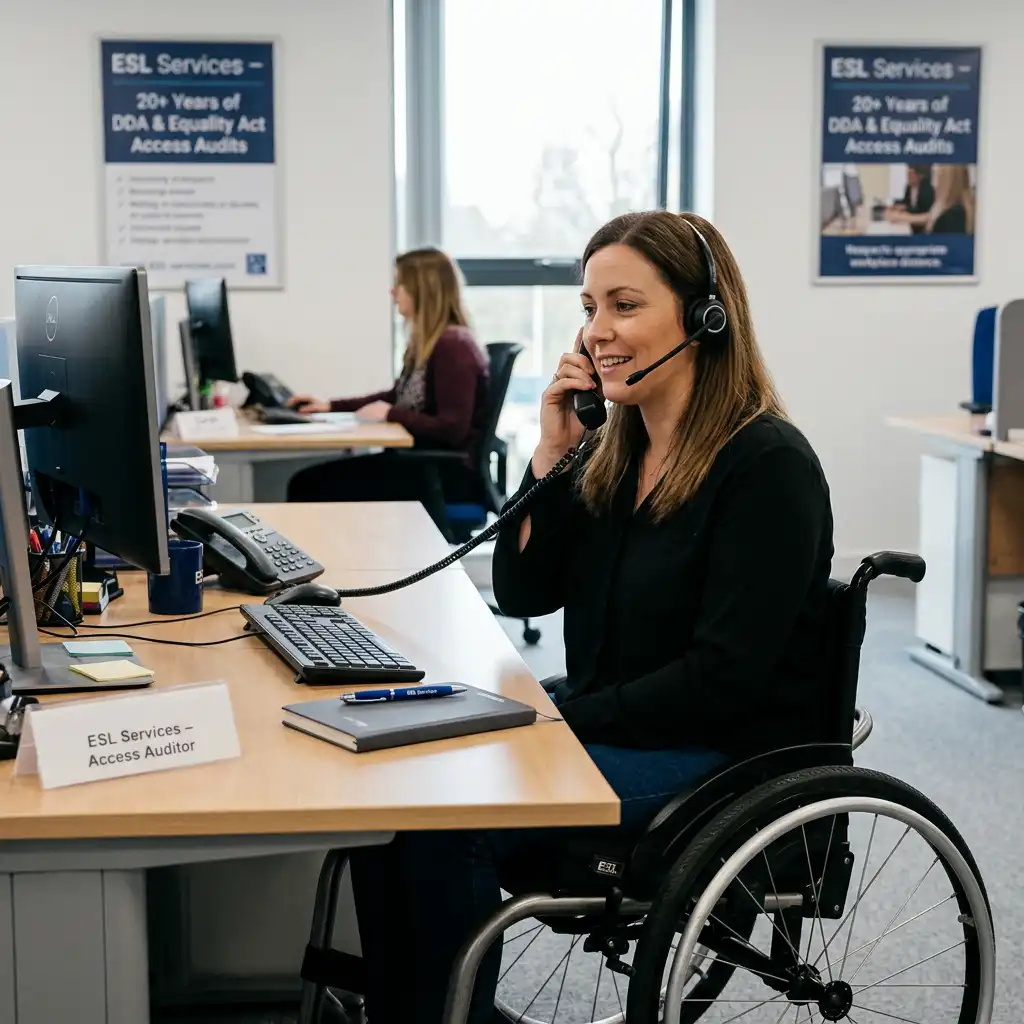
What Is a Disability Access Audit?
A Disability Access Audit is a professional assessment of a building, premises or service to identify barriers that may prevent disabled people from accessing, using or navigating an environment safely and independently.
At ESL Services, our Disability Accessibility Audits consider both the physical environment and how buildings and services are used. We assess potential barriers affecting people with mobility, sensory and other disabilities, while also considering whether reasonable adjustments may be required to improve accessibility and inclusion.
Our Disability Access Audits can assess areas such as:
Access routes, entrances and approaches
Car parking, drop-off areas and external pathways
Ramps, steps and changes in level
Doors, corridors and internal circulation
Wheelchair accessibility and accessible facilities
Accessible toilets and other facilities
Signage, wayfinding and information
Lighting, visibility and visual information
Hearing and communication accessibility
Customer, reception and service areas
Emergency evacuation arrangements
Policies, procedures and reasonable adjustments
Other barriers that may affect disabled employees, customers, visitors and service users
Practical Accessibility Recommendations
Following the assessment, we provide practical recommendations for improvement, helping organisations understand identified barriers and consider appropriate measures to improve accessibility, inclusion and the experience of disabled people.
What is a DDA Audit?
A DDA audit is commonly used to describe an assessment of accessibility in relation to the Disability Discrimination Act (DDA). Although the DDA has largely been replaced by the Equality Act 2010 in Great Britain, the term “DDA audit” remains widely used when people search for accessibility assessments.
Today, organisations may also refer to this type of assessment as a Disability Access Audit, DDA Audit or Equality Act Audit.
A professional audit can help identify areas where access could be improved and provide practical recommendations for addressing potential barriers.
Access Audit Reports
At ESL Services, our Disability Access Audit Reports provide a clear assessment of your building, services, and facilities, identifying barriers that may affect disabled people and recommending practical improvements.
Each report is tailored to your organisation and provides:
- A detailed review of accessibility issues
- Identification of potential barriers
- Prioritised recommendations for improvements
- Guidance on reasonable adjustments
- Practical solutions to improve inclusion and accessibility
Our reports help organisations understand their responsibilities under the Equality Act 2010, plan accessibility improvements, and create more welcoming environments for customers, employees, and visitors.
Whether you require a DDA Audit, Equality Act Audit, or Disability Accessibility Audit, ESL Services provides professional reports for organisations across Livingston, West Lothian, Central Scotland, and the UK.

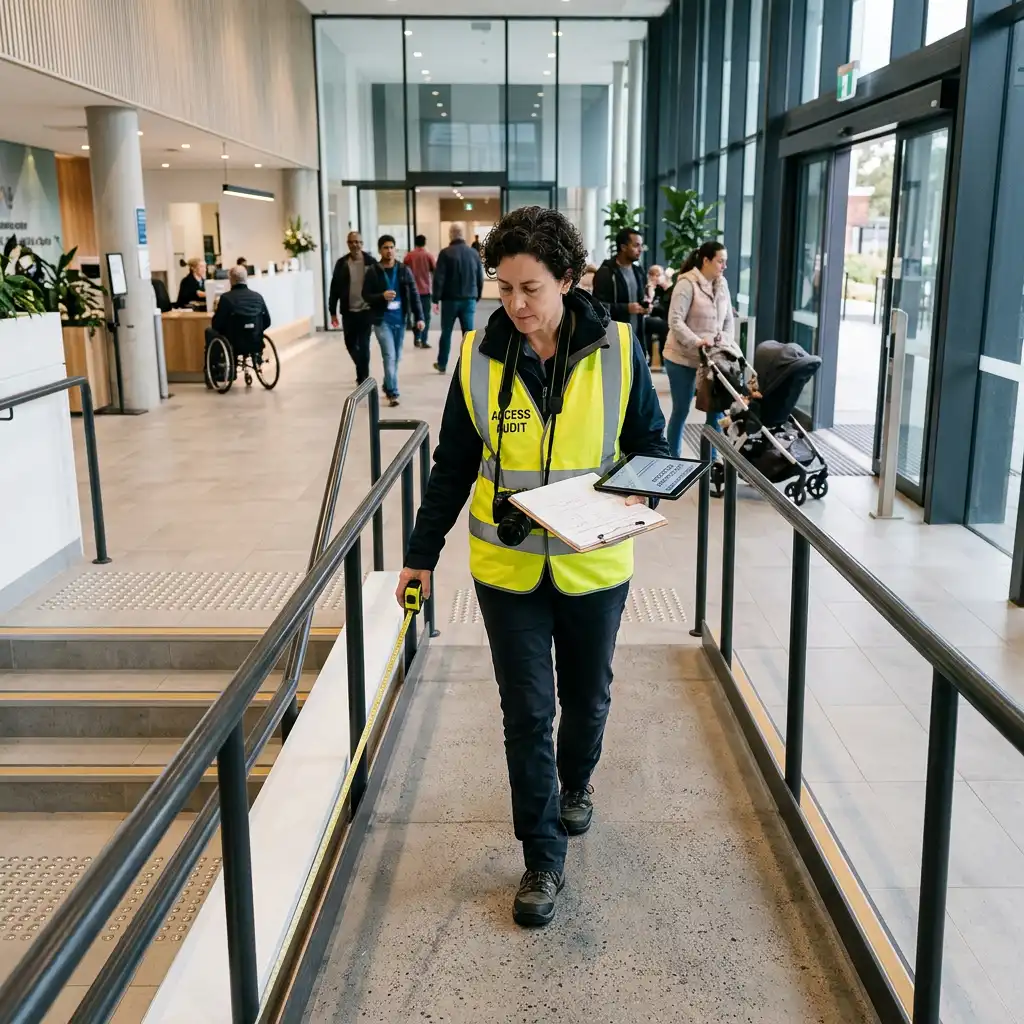
Walkthrough Access Audits
A Walkthrough Access Audit is an effective way for organisations to receive professional accessibility advice through a practical on-site review of their premises. It provides an initial assessment of access requirements, identifies potential barriers, and highlights opportunities for improvement.
Walkthrough Access Audits are ideal for organisations planning refurbishment works, reviewing their current accessibility, or looking for guidance on improving access without commissioning a full Disability Access Audit (DDA Audit / Equality Act Audit).
What Are Reasonable Adjustments?
Reasonable adjustments are changes that organisations may need to make to remove or reduce substantial disadvantages experienced by disabled people.
Depending on the organisation and circumstances, adjustments could include changes to physical access, providing accessible information, modifying policies or procedures, introducing equipment or assistive technology, or making changes to the way a service is delivered.
A Disability Access Audit can help identify physical and practical barriers that may need to be considered when determining appropriate improvements.


What Disability Training Is Required?
ESL Services can advise on suitable disability training as part of a Disability Access Audit, helping organisations identify staff training needs alongside physical, communication, and service-related accessibility improvements. Appropriate Disability Equality Training can help staff understand the barriers faced by disabled people, communicate more effectively, and recognise when reasonable adjustments may be required. This can support organisations in providing more accessible services, improving staff confidence, and creating a more inclusive environment for disabled customers, employees, and visitors.
Why Your Organisation May Need an Equality Act Audit
An Equality Act Audit can help your organisation understand whether your premises and services are accessible and whether reasonable adjustments may be required.
A professional audit can help you:
- Identify Barriers Affecting Disabled People
- Improve Accessibility and Customer Experience
- Support Equality, Diversity, and Inclusion Commitments
- Plan Practical Improvements
- Demonstrate Good Practice in Accessibility
- Create a Safer and More Welcoming Environment

Identify Barriers Affecting Disabled People
Improve Accessibility and Customer Experience
Support Equality, Diversity, and Inclusion Commitments
Plan Practical Improvements
Demonstrate Good Practice in Accessibility
Create a Safer and More Welcoming Environment
Benefits of a Disability Access Audit (Including the Purple Pound)
A Disability Access Audit (also known as a DDA Audit, Equality Act Audit, or Disability Accessibility Audit) provides clear, practical benefits for organisations and businesses.
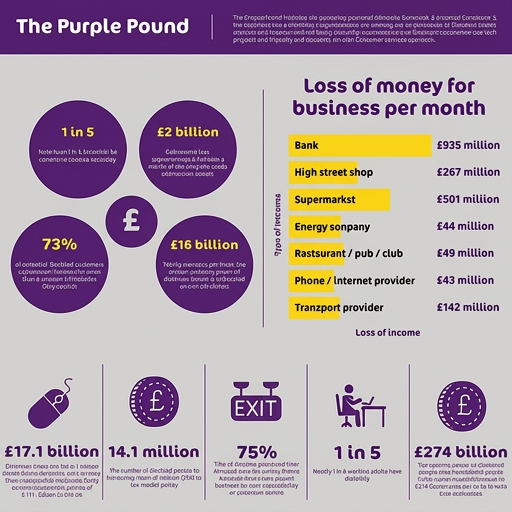
Beyond compliance and inclusion, one of the most important business benefits is access to the “Purple Pound” – the spending power of disabled people and their families.
What Is the Purple Pound?
The Purple Pound refers to the significant spending power of disabled people, their households, and companions in the UK economy.
When organisations improve accessibility, they are not only meeting legal and ethical responsibilities—they are also unlocking a valuable customer base that is often underserved due to barriers in access, communication, or service design.
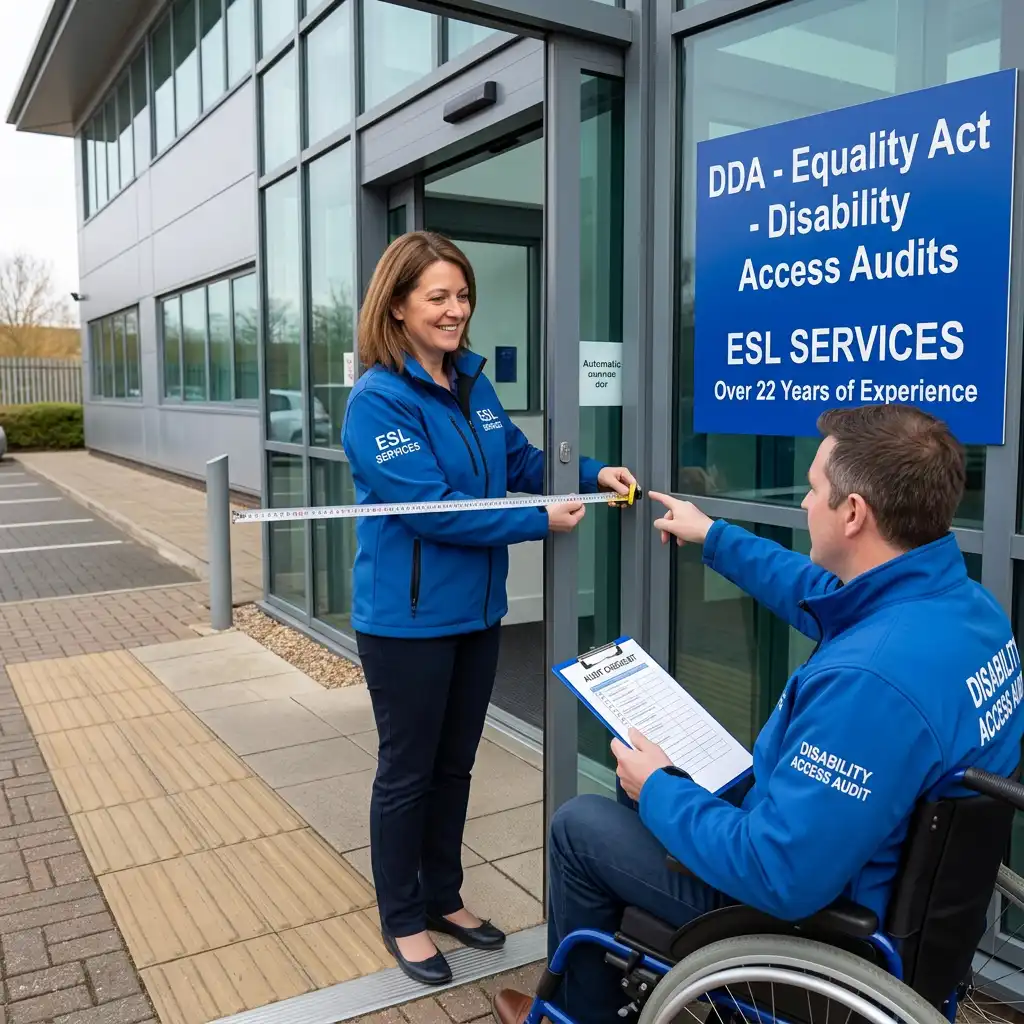
Expert Disability Accessibility Audits Across Scotland and the UK
ESL Services provides Disability Access Audits in Livingston, West Lothian, Central Scotland, and throughout the UK.
We work with:
- Businesses
- Offices and workplaces
- Retail premises
- Healthcare providers
- Charities
- Community organisations
- Education providers
- Public buildings
- Leisure facilities
Our reports provide clear, practical recommendations tailored to your organisation and the people who use your services.
Keeping you Informed and Compliant
An ESL Services Disability Access Audit puts you in control of your accessibility responsibilities, providing a clear assessment of your premises and practical recommendations for improvement. We can also help keep you informed of relevant legislative and accessibility standards changes for up to five years following your audit.
Our audit will identify potential accessibility barriers and areas where reasonable adjustments may be required, helping you understand and address your responsibilities under relevant legislation, regulations and recognised accessibility standards. These include Part III of the Disability Discrimination Act (DDA) 1995, as amended, BS 8300:2018 Parts 1 and 2, Part M of the Building Regulations, and the Equality Act 2010.
Protection against Claims of Discrimination
Service providers have a legal duty to make reasonable adjustments to the way they provide their services to disabled people, in accordance with the Equality Act 2010 and other relevant legislation.
A service provider is someone who provides a service to the public. This can include publicans, hairdressers, hoteliers, shopkeepers and food takeaway proprietors.
Service providers have a duty to make reasonable adjustments to remove or reduce barriers that may prevent disabled people from accessing their services. One of the first steps an organisation can take is to arrange a professional Disability Access Audit, which can help identify barriers and determine what reasonable adjustments may be required.
Service providers are more likely to comply with their duty to make reasonable adjustments when they arrange for an access audit of their premises to be carried out.
An access audit provides the owner or operator of the premises with a detailed report identifying areas that are currently compliant and highlighting further actions that may be required to improve accessibility and meet relevant legal requirements.
Acting on the findings of an access audit can help demonstrate that reasonable steps have been taken to identify and address accessibility barriers, potentially reducing the risk of claims of discrimination from disabled customers.
Book Your Disability Access Audit With ESL Services
Whether you require a DDA Audit, Equality Act Audit, Disability Access Audit, or Disability Accessibility Audit, ESL Services can help you improve accessibility and inclusion.
Contact us today at sales@esl-services.co.uk or 01506 412791 to arrange an assessment for your premises in Livingston, West Lothian, Central Scotland, or anywhere in the UK.